

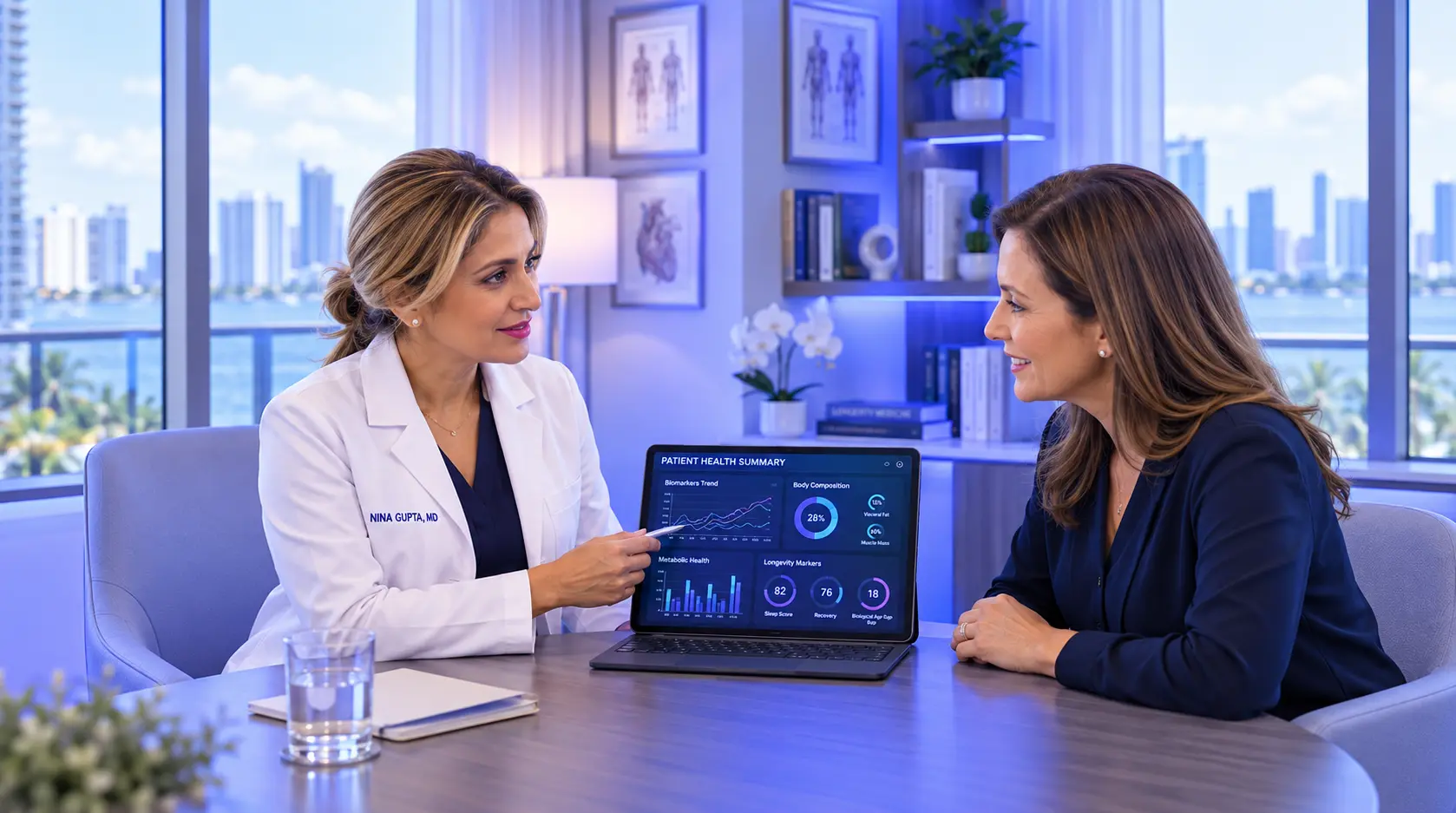
Yes, wearable data for longevity can make a medical consultation significantly more informative by revealing objective patterns in your sleep, daily activity, resting heart rate, and routine physiological recovery. A smartwatch, fitness tracker, or smart ring continuously collects data between clinical appointments, helping you and your physician discuss physiological shifts that might otherwise be difficult to recall accurately. Instead of relying entirely on vague memories of how you felt over the past month, you can bring a clearer, continuous picture of your day-to-day habits to the conversation.
Imagine waking up exhausted after spending eight hours in bed, even though your smart ring assigned you an optimistic "sleep score" of 88. Perhaps your smartwatch has simultaneously recorded a subtle rise in your morning resting heart rate over the past two weeks. Should you trust the wearable device, your physical symptoms, or your own intuition?
The clinical answer is to consider all three in medical context. Wearable measurements provide valuable diagnostic clues, but they rarely pinpoint the underlying physiological etiology of a health concern on their own.
During a longevity consultation in Miami, wearable health summaries enable a physician to explore targeted questions regarding sleep fragmentation, circadian timing, physical conditioning, autonomic recovery, and sedentary blocks. They also transform abstract longevity aspirations into tangible clinical roadmaps. For instance, an individual aiming to boost cardiovascular stamina may discover that extensive daytime sitting is undermining their evening workouts. Another patient may uncover that irregular bedtimes directly correlate with afternoon fatigue and cognitive dips.
At Longevity Institute Miami, wearable summaries serve as a meaningful complement to a thorough medical history, physical examination, advanced diagnostic testing, and clinical judgment. They do not replace formal evaluations. The objective is to use relevant biometric data to ask sharper questions and design sustainable protocols, rather than letting a proprietary algorithm dictate clinical decisions.
What Is Wearable Health Data?
Wearable health data encompasses the physiological, behavioral, and environmental measurements captured by miniaturized electronic sensors worn continuously against the skin. Depending on the device architecture and onboard hardware, these measurements typically record step cadence, total caloric movement, estimated sleep duration, photoplethysmography (PPG) pulse rates, exercise intensity zones, skin temperature variations, and optical blood volume pulse changes. Selected devices also interface with compatible external diagnostic monitors or feature FDA-cleared single-lead electrocardiogram (ECG) sensors.
These ongoing measurements offer an objective, high-frequency snapshot of your daily life. A conventional clinic appointment captures your health at a single, isolated moment in time—often influenced by clinical environment stress ("white-coat effect") or daily fluctuations. In contrast, a wearable records repetitive metrics across days, weeks, and months. This continuous longitudinal data makes it easier to pinpoint subtle, progressive trends that warrant physician review, such as a steady decline in daily physical activity after an injury or a gradual disturbance in resting pulse during periods of chronic work stress.
Direct Physiological Readings vs. Algorithmic Inferences
It is critical to recognize that not every number displayed on your wearable is a direct physiological measurement. Sensors directly capture physical signals—such as optical reflections of blood flow (photoplethysmography) or mechanical acceleration (accelerometry). Software algorithms then process those raw signals to estimate sleep architecture, caloric burn, recovery scores, and physiological "readiness." Because different manufacturers employ proprietary, unstandardized algorithms, an "80% readiness" on one device cannot be compared to an "80% recovery" on another.
The most scientifically sound way to approach wearable data is as a source of supporting collateral information—not an infallible medical authority. Device metrics must always be weighed alongside your physical symptoms, medical history, active prescriptions, and lifestyle context. An unexpected or lower-than-desired score does not automatically signify disease. Conversely, an ideal device score cannot guarantee the absence of cardiovascular disease, metabolic dysfunction, or nutritional deficiencies.
How Smartwatches, Fitness Trackers, and Smart Rings Collect Data
Different categories of wearable technology prioritize distinct form factors, sensor configurations, and user applications:
Devices such as the Apple Watch and Samsung Galaxy Watch combine optical heart rate monitoring, multi-axis accelerometers, GPS tracking, and single-lead ECG recordings. They excel at real-time workout tracking, high/low heart rate notifications, and irregular rhythm detection.
Rings such as the Oura Ring or Ultrahuman Ring Air position infrared sensors against digital palmar arteries. Their snug finger placement makes them particularly adept at overnight sleep staging, nocturnal resting heart rate, heart rate variability, and distal skin temperature trends.
Trackers like Whoop 4.0, Garmin, and Fitbit emphasize continuous biometric strain, cardiovascular exertion zones, recovery kinetics, and respiratory tracking. They are built for longitudinal performance, sleep efficiency, and training periodization.
Measurement precision is heavily influenced by everyday practical factors. Loose watchbands, excessive arm movement during sampling, poor skin contact, darker skin pigmentation attenuation, peripheral vasoconstriction from cold weather, and firmware algorithm updates can all distort readings. This is why noting your exact device model and observing long-term trends is far more meaningful to a longevity doctor than stressing over an isolated outlier reading.
Rather than assuming that the most expensive gadget delivers the most clinically actionable information, determine what question you actually want answered. If your primary concern is an inconsistent bedtime, a simple sleep diary or basic tracker is more than sufficient. The optimal health-tracking approach is one that provides clear, relevant insights without provoking health anxiety or hyper-fixation.
Which Wearable Metrics Are Most Useful for Longevity?
Not every metric presented on a digital dashboard deserves equal weight during a medical evaluation. In longevity medicine, the metrics that yield the highest clinical utility are those that directly reflect biological rhythms, autonomic nervous system tone, cardiovascular conditioning, and metabolic health:
| Wearable Metric | What It Measures | Clinical Utility in Longevity | Important Limitations |
|---|---|---|---|
| Sleep Timing & Consistency | Bedtime, wake time, sleep midpoint regularity, sleep duration. | Assessing circadian rhythm alignment, sleep latency, and lifestyle contributions to fatigue. | Cannot diagnose obstructive sleep apnea (OSA) or substitute for polysomnography. |
| Daily Movement & Steps | Total daily steps, active minutes, prolonged sedentary bouts. | Quantifying non-exercise physical activity (NEAT) and insulin sensitivity support. | Underreports resistance training, cycling, swimming, and isometric strength. |
| Resting Heart Rate (RHR) | Lowest steady pulse rate during deep rest or overnight sleep. | Tracking cardiovascular efficiency, systemic inflammation, and baseline recovery. | Fluctuates with hydration, acute viral illness, alcohol consumption, and medication. |
| Heart Rate Variability (HRV) | Beat-to-beat variation in milliseconds (RMSSD or SDNN). | Reflecting parasympathetic (vagal) autonomic regulation and overall stress resilience. | Proprietary algorithms vary by device; cannot diagnose hormone deficiency or adrenal fatigue. |
1. Sleep Timing and Consistency
Sleep tracking data provides objective visibility into when you fall asleep, when you wake up, and how significantly your sleep schedule fluctuates between weekdays and weekends (known as "social jetlag"). These patterns are invaluable when evaluating persistent daytime sleepiness, cognitive brain fog, low morning energy, and metabolic sluggishness. An unpredictable circadian routine often impairs hormonal regulation and insulin sensitivity, even if total time in bed appears adequate.
Most wearables offer estimates of sleep stages, categorizing rest into light sleep, deep (slow-wave) sleep, and rapid eye movement (REM) sleep. While these breakdowns are fascinating to observe, they should never be confused with clinical polysomnography (a formal medical sleep study). Consumer devices rely primarily on wrist accelerometry and optical pulse variability, which cannot replicate the multi-channel electroencephalogram (EEG), electrooculogram (EOG), and respiratory effort monitors used in medical sleep laboratories.
American Academy of Sleep Medicine (AASM) Position: As articulated in the official position statement published in the Journal of Clinical Sleep Medicine, consumer sleep technologies must be interpreted within a comprehensive medical evaluation and should never be used as standalone diagnostic substitutes for validated clinical diagnostic tools.
If you wake up unrefreshed, struggle with debilitating midday fatigue, or have a partner who notices loud snoring, choking, or gasping during sleep, do not assume your sleep is healthy based on an inflated device score. During your longevity consultation, Dr. Nina Gupta evaluates your sleep summaries in tandem with your medications, caffeine intake, alcohol habits, airway structure, and metabolic health markers to determine whether clinical sleep testing is indicated.
2. Daily Movement and Exercise Patterns
Activity tracking bridges the gap between patient recollection and daily reality. A patient may remember completing three 45-minute gym workouts during the week, while their tracker reveals that they spent an average of 10.5 hours sitting each day between those sessions. Sustained sedentary periods independently impair lipid clearance and vascular endothelial function, regardless of whether you exercise for an hour in the morning.
While step counts provide an intuitive baseline for daily ambulation, they provide an incomplete perspective on musculoskeletal and cardiovascular longevity. Crucial components of healthy aging—such as progressive resistance training, eccentric loading, balance work, and zone-2 aerobic conditioning—place demands on the body that optical wrist accelerometers frequently fail to quantify. Carrying heavy groceries, gardening, or lifting free weights can build vital bone density and muscular mass without registering substantial step totals.
During a physician consultation, these movement patterns help determine whether your current activity routine actually supports your longevity goals. Are you achieving adequate weekly resistance training to counteract sarcopenia? Are you maintaining sufficient zone-2 aerobic volume to support mitochondrial density? Are recurring joint aches forcing you to reduce movement? A physician can help you design sustainable, progressive physical protocols that protect joint integrity while optimizing metabolic health.
3. Resting Heart Rate and Heart Rate Variability (HRV)
Resting heart rate (RHR) is one of the most reliable cardiovascular metrics captured by modern wearables. Tracked consistently during deep rest or nocturnal sleep, a baseline RHR reflects cardiac stroke volume, autonomic equilibrium, and physical conditioning. A sustained elevation of 5 to 10 beats per minute above your established baseline may signal subclinical viral infection, dehydration, severe psychological stress, excessive alcohol intake, medication shifts, or cardiovascular strain.
Heart rate variability (HRV) measures the millisecond-level variations between consecutive heartbeats (the R-R intervals). Healthy autonomic regulation is characterized by natural variability: when you inhale, sympathetic activity increases heart rate; when you exhale, parasympathetic (vagus nerve) activity slows it down. Higher baseline HRV generally reflects adaptive autonomic resilience and cardiovascular conditioning, while lower readings often accompany fatigue, systemic illness, physiological overload, or chronic psychological distress.
Dispelling Commercial Myths About HRV
In commercial wellness marketing, low HRV is often erroneously promoted as proof of "adrenal fatigue," hormone exhaustion, or "accelerated biological aging." In clinical medicine, there is no validated diagnostic link between a transiently low wearable HRV score and endocrine failure. Comparing your HRV to a friend's reading or an arbitrary online chart is scientifically meaningless because HRV is highly individual, genetically influenced, age-dependent, and heavily dictated by the mathematical formula (e.g., RMSSD vs. SDNN) used by that specific device. What matters clinically is your own baseline trend over weeks and months.
How Wearable Data Can Improve a Longevity Consultation
The primary medical advantage of wearable data is clinical precision. During a standard medical visit, patients frequently report general impressions: "I have felt unusually tired lately" or "I don't think I am recovering well from workouts." While these subjective observations are critical, wearable records add measurable context:
- Corroborating Lifestyle Changes: You can demonstrate that your sleep onset shifted 90 minutes later after starting a demanding project, and that your average daily steps dropped from 9,000 to 4,200 during the same four-week window.
- Tracking Physiological Recovery: You can review whether an elevated nocturnal resting pulse coincides with late-evening dining, alcohol consumption, or increased training volume.
- Guiding Targeted Diagnostics: Objective wearable trends help your physician determine whether symptoms warrant targeted longevity blood tests, formal sleep medicine referral, ambulatory cardiac telemetry, or simple lifestyle modifications.
Connecting Daily Health Patterns With Symptoms
Biometric data becomes most powerful when paired directly with clinical symptoms. Consider two common clinical scenarios encountered in longevity practice:
A patient reports severe morning headaches, brain fog, and chronic midday exhaustion. Their smart ring awards them a 90% sleep score because they were motionless in bed for 8.5 hours. A clinical review reveals that the patient's nocturnal oxygen saturation periodically dips and their bed partner notes loud snoring. The reassuring wearable score is clinically misleading; the symptoms warrant formal evaluation for sleep-disordered breathing.
A patient notices that their resting pulse has climbed by 8 bpm over three weeks alongside mild shortness of breath upon exertion. Wearable logs confirm this elevation began precisely following a resolved respiratory infection. This objective trend provides the physician with clear clinical rationale to perform an ECG, assess inflammatory markers, and examine for post-viral autonomic or pulmonary sequelae.
To make your data clinically useful, keep a concise record of when symptoms happen, their severity, and potential triggers. If you experience heart palpitations, lightheadedness, or sudden breathlessness, note the exact timestamp so your physician can cross-reference it against recorded heart rate tracings.
Turning Health Data Into Personalized Recommendations
The goal of reviewing wearable health data in a longevity consultation is not to chase arbitrary score perfection, but to establish realistic, personalized interventions. If your data reveals erratic sleep midpoints, your physician can guide evidence-based circadian entrainment techniques. If activity tracking reveals that you sit for six continuous hours, you can set actionable movement triggers throughout the workday.
Importantly, wearable data should never be used as an excuse for indiscriminate, high-cost medical testing or unproven therapies. A transient dip in HRV or a suboptimal readiness score does not justify starting experimental peptide cocktails, broad hormone replacement, or costly IV infusions. Genuine longevity medicine is grounded in clinical evidence, patient safety, and addressing proven drivers of chronic disease: insulin sensitivity, vascular health, cardiovascular fitness, and restorative sleep.
What Wearables Cannot Tell You About Longevity
Wearable devices are exceptional tools for behavioral tracking, but they have distinct medical limitations that every patient should understand:
- They Cannot Predict Your Lifespan: A proprietary "vitality score" or "fitness age" generated by a smartphone app is an algorithmic marketing construct, not a medically validated metric of cellular longevity.
- They Cannot Measure Biological Aging: Consumer sensors cannot measure telomere length, DNA methylation patterns, epigenetic clocks, or cellular senescence. Improving your recovery score reflects acute rest, not cellular rejuvenation.
- They Cannot Detect Asymptomatic Silent Killers: A wearable dashboard showing perfect scores cannot detect advanced atherosclerotic plaque, elevated Apolipoprotein B (ApoB), insulin resistance, early diabetes, osteopenia, or early-stage malignancies. These conditions require validated clinical bloodwork, imaging, and physical exams.
FDA Safety Warnings: Blood Pressure & Non-Invasive Glucose Claims
Patients must exercise extreme caution regarding consumer devices making unsubstantiated clinical claims. The U.S. Food and Drug Administration (FDA) has issued explicit safety communications warning consumers against using:
- Unauthorized Blood Pressure Watches & Rings: Smartwatches or rings claiming to measure blood pressure without an inflatable cuff have not been validated for diagnostic accuracy and may lead to inaccurate readings and unmanaged hypertension.
- Non-Invasive Blood Glucose Watches & Rings: The FDA has strongly warned against smartwatches or rings that claim to measure blood glucose levels directly without piercing the skin. These devices do not test blood glucose accurately and pose severe medical hazards for individuals managing diabetes. (Note: This is distinct from smartwatches that legally display data beamed from an FDA-cleared continuous glucose monitor [CGM] sensor).
Maintaining a clear distinction between lifestyle monitoring and clinical diagnosis keeps longevity care safe, evidence-based, and focused on interventions with proven efficacy.
How to Prepare Wearable Data for Your Consultation
You do not need to print out hundreds of daily screenshots or build complex spreadsheets before your longevity consultation. Overwhelming amounts of unorganized raw data can hinder rather than help a medical discussion. Follow this streamlined preparation guide:
Export or screenshot high-level monthly summaries showing your average bedtime, wake time, resting heart rate range, and weekly active minutes. A 14 to 30-day window provides an ideal baseline for clinical review.
Note the specific make, model, and generation of your device (e.g., Apple Watch Series 9, Oura Gen 3). Mention whether you wear it loosely, charge it overnight, or swap wrists, as fit directly alters optical sensor fidelity.
Make brief notes regarding recent international travel, acute illnesses, intense athletic events, medication starts, or evenings with alcohol. Context explains why an isolated reading deviated from normal.
Never disclose your master device account passwords. When sharing health reports with medical clinics, use built-in PDF export tools (e.g., Apple Health PDF export or Garmin reports) through secure, HIPAA-compliant clinic channels.
Along with your wearable summaries, remember to bring your complete list of current medications, nutritional supplements, prior blood test panels, and any previous medical records so your physician can evaluate your health holistically.
When Wearable Readings Need Medical Attention
Consumer wearable notifications can occasionally detect patterns that warrant prompt clinical evaluation, but they can also generate false positives from motion artifacts. Knowing how to distinguish an outpatient clinical question from a genuine emergency is vital:
Do not wait for a wearable alert or attempt repeated device readings if you experience acute medical symptoms. Immediately call 911 or proceed to the nearest emergency department if you develop chest pain, pressure, or tightness; unexplained fainting or syncope; sudden severe shortness of breath; or symptoms of a stroke (facial drooping, arm weakness, or slurred speech). A normal wearable reading cannot rule out a life-threatening acute cardiovascular or cerebrovascular event.
Readings That Deserve Outpatient Medical Follow-Up
Schedule a medical evaluation with a physician if your wearable repeatedly generates any of the following alerts in the absence of acute emergency symptoms:
- Irregular Heart Rhythm Notifications: According to the 2023 ACC/AHA/ACCP/HRS Guideline for the Diagnosis and Management of Atrial Fibrillation, wearable pulse notifications suggestive of atrial fibrillation (AFib) require formal clinical assessment, physician-interpreted electrical tracings, and medical confirmation before any treatment or anticoagulation decisions are initiated.
- Single-Lead ECG Tracings Showing Inconclusive or Atrial Fibrillation Flags: If your smartwatch records an ECG tracing during fluttering, palpitations, or lightheadedness, save the PDF tracing immediately and share it with your doctor.
- Persistent Unexplained Tachycardia or Bradycardia: Resting heart rates consistently exceeding 100 bpm or dropping unexpectedly below 45–50 bpm (in non-endurance athletes) warrant clinical examination, thyroid evaluation, and potentially 12-lead electrocardiography.
- Recurring Nocturnal Blood Oxygen Drops: Consistent oxygen saturation dips below 90% paired with daytime drowsiness warrant formal evaluation for obstructive sleep apnea.
Do You Need a Wearable Before a Longevity Appointment?
No. You do not need to purchase or wear any digital tracker before attending a longevity consultation.
Wearable devices are helpful supplementary tools, not clinical prerequisites. The cornerstone of longevity medicine will always be a comprehensive medical history, a detailed review of family genetic risk, a physical examination, and clinically validated diagnostic testing—including advanced lipid particle testing, metabolic panels, and cardiovascular risk stratification.
The Value of a Simple Paper Journal
If you want to track your habits prior to your appointment, a simple notebook or notes app is extraordinarily effective. Recording your approximate bedtime, wake time, physical activity sessions, dietary meals, and energy levels for 7 to 14 days offers outstanding clinical insight without requiring you to buy a gadget or learn complex software.
Furthermore, your psychological relationship with health tracking matters. For some patients, digital trackers foster positive motivation; for others, checking fluctuating recovery metrics generates orthosomnia (anxiety caused by sleep tracking) and unwarranted stress. If tracking creates mental tension, discuss this openly with your physician. The goal of longevity care is to enhance your well-being, vitality, and peace of mind—not to introduce another source of daily anxiety.
Frequently Asked Questions About Wearable Health Data
Clear, physician-reviewed answers to common patient questions regarding smartwatches, smart rings, and longevity care in Miami.
Make Your Health Data Part of a Meaningful Longevity Plan
Your smartwatch or smart ring offers an engaging, high-frequency snapshot of your daily sleep, movement, and pulse dynamics. However, its true value lies not in admiring a high daily score, but in empowering you and your physician to ask sharper, more clinically meaningful questions about your health.
A fluctuating trend can serve as an early prompt to look deeper into your habits, while a consistently reassuring score provides only bounded insight. Neither replaces the clinical foundation of physical symptoms, detailed medical history, appropriate diagnostic testing, and sound medical oversight.
A thoughtful, evidence-informed longevity plan focuses on data that translates into tangible healthspan improvements. That means addressing irregular circadian timing, overcoming barriers to muscle-building exercise, uncovering silent cardiovascular risks, optimizing metabolic health, and investigating persistent fatigue. Wearable summaries enhance this process when they are reliable, interpreted in context, and aligned with your individual clinical priorities.
At Longevity Institute Miami, Dr. Nina Gupta, MD, ABAARM, FAARM delivers physician-led longevity assessments focused on your individual health history, biological risks, and long-term vitality goals. Bringing your existing wearable summaries can help make your initial consultation more specific, but you do not need to purchase a device or possess perfect data before scheduling an evaluation.
Ready for a Clearer, Physician-Led Picture of Your Health?
Connect with our clinical team to explore how personalized preventive medicine, advanced biomarker testing, and lifestyle optimization can protect your future healthspan:
The goal is not to obsess over every metric on your screen. It is to harness relevant biometric data to build a sustainable, evidence-informed roadmap for lifelong health and vitality.
Scientific & Medical References
- Khosla S, et al. Consumer Sleep Technology: An American Academy of Sleep Medicine Position Statement. Journal of Clinical Sleep Medicine. 2018;14(5):877–880. Clinical guidance on the utility and diagnostic limitations of commercial sleep-tracking devices.
- U.S. Food and Drug Administration (FDA). Do Not Use Unauthorized Devices for Measuring Blood Pressure: FDA Safety Communication. Regulatory safety guidance regarding unauthorized wrist- and ring-based blood pressure claims.
- U.S. Food and Drug Administration (FDA). Do Not Use Smartwatches or Smart Rings to Measure Blood Glucose Levels: FDA Safety Communication. Explicit safety warning against non-invasive glucose measurement claims on consumer wearables.
- Joglar JA, et al. 2023 ACC/AHA/ACCP/HRS Guideline for the Diagnosis and Management of Atrial Fibrillation. Circulation. 2024;149:e1–e156. Multi-society clinical consensus on interpreting wearable pulse notifications and confirming arrhythmias.