
You wake up tired, struggle through the afternoon slump with a third cup of coffee, and wonder why an entire weekend of restful sleep never quite catches you up. Perhaps you have started asking yourself, “Is this just what getting older feels like?”
Occasional tiredness after an intense workweek, poor night of travel, or demanding family schedule is completely natural. However, exhaustion that persists for weeks, fails to resolve with sleep, or interrupts your everyday professional and physical life deserves clinical attention.
At Longevity Institute Miami, functional medicine brings your subjective symptoms, detailed medical history, environmental stressors, and daily habits into a single, cohesive medical conversation. The goal is to uncover treatable physiological contributors and agree on practical, individualized next steps. In the vast majority of midlife patients, persistent low energy stems from several overlapping biological factors rather than a single mysterious cause.
What Does Functional Medicine Mean for Fatigue?
Functional medicine uses an individualized, systems-biology framework that examines how your lifestyle, daily environment, genetic predispositions, and different organ systems interact with one another. When applied to a persistent fatigue consultation, this approach moves far beyond a five-minute review of symptoms.
Dr. Nina Gupta, MD, begins by constructing a thorough clinical timeline:
- When did your energy drop begin? Was the onset insidious over months, or acute following a viral infection, job transition, or surgery?
- What changed in your life around that time? Have your sleep patterns, body composition, prescription medications, or dietary habits shifted?
- What makes your tiredness better or worse? Does physical exertion provide a temporary boost, or does it trigger severe post-exertional exhaustion? Does energy crash predictably 90 minutes after meals?
Complementing, Not Replacing, Standard Medical Evaluation
Investigating underlying root causes is a core tenet of good medicine in general; no single discipline has an exclusive claim to thorough evaluation. Functional medicine at Longevity Institute Miami works in synergy with your existing primary care physician and medical specialists. A responsible clinical plan explicitly explains what each diagnostic test accomplishes, its clinical limitations, and whether the result will meaningfully alter your medical management.
What Can Cause Low Energy After 40?
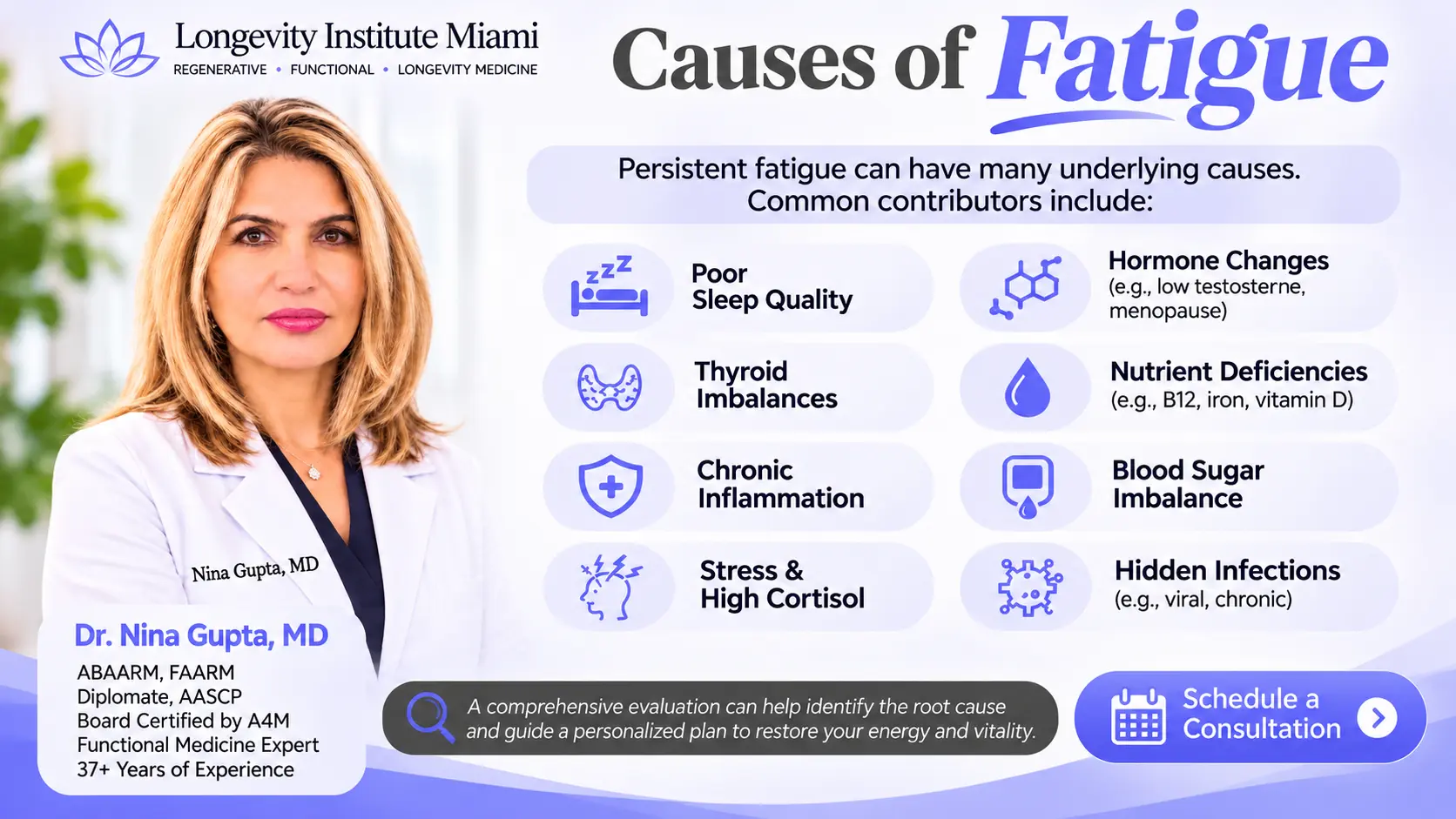
As we enter our fourth and fifth decades, physiological reserve gradually declines while cumulative lifestyle pressures, metabolic wear, and hormonal transitions accelerate. The following five contributors represent the most frequent medical reasons for chronic tiredness after 40:
1. Sleep That Does Not Restore You
Spending eight hours in bed does not guarantee restorative sleep architecture. Obstructive sleep apnea (OSA) becomes significantly more prevalent after age 40 due to age-related changes in upper airway muscle tone, weight fluctuations, and shifting soft palate anatomy.
Loud snoring, witnessed breathing pauses, waking with dry mouth or morning headaches, and relentless daytime sleepiness are classic indicators. However, many adults experience fragmented sleep without obvious snoring—a condition characterized by subtle micro-arousals that prevent deep slow-wave and REM sleep. An outpatient or home sleep evaluation is frequently the single most impactful test a tired patient can undertake.
2. Anemia or Nutritional Absorption Problems
Anemia impairs oxygen transport to tissues, resulting in shortness of breath during routine exertion, rapid heart rate, lightheadedness, and systemic muscular lethargy. In adults over 40, nutritional insufficiencies can develop subtly due to restrictive dieting, decreased stomach acid secretion, digestive disorders (like celiac disease or inflammatory bowel changes), or prior bariatric procedures.
Importantly, patients can suffer from iron deficiency without clinical anemia—meaning hemoglobin is technically within the normal reference range, but bone marrow ferritin (stored iron) is profoundly depleted. Similarly, marginal vitamin B12 or folate levels can dampen cellular methylation and mitochondrial energy synthesis. Self-prescribing high-dose commercial supplements without a diagnostic blood check can mask underlying pathology, alter lab markers, and delay proper care.
3. Subclinical or Overt Thyroid Disease
The thyroid gland regulates the baseline metabolic rate of every organ in your body. An underactive thyroid (hypothyroidism), often triggered by autoimmune Hashimoto’s thyroiditis, typically peaks in frequency during the 40s and 50s—particularly in women.
Common symptoms include persistent fatigue, cold intolerance, persistent constipation, dry skin, unexplained weight gain, and mental clouding. Because these complaints overlap with many midlife changes, accurate diagnosis requires clinical correlation alongside blood testing, beginning with sensitive Thyroid-Stimulating Hormone (TSH), Free T4, and antithyroid antibodies when clinically indicated.
4. Metabolic Health Concerns & Glycemic Volatility
A strong family pedigree of diabetes, elevated fasting blood sugar, or expanding visceral abdominal fat warrants targeted metabolic screening. Prediabetes and cellular insulin resistance frequently advance silently for years with no overt warning signs.
A severe energy dip 60 to 120 minutes following carbohydrate-rich lunches is a classic hallmark of reactive hypoglycemia triggered by exaggerated insulin surges. However, an afternoon slump alone cannot diagnose metabolic dysfunction. Hemoglobin A1c and fasting plasma glucose are validated clinical screening standards, while advanced lipid particles and fasting insulin provide deeper physiological context when interpreted by a qualified physician. Explore our dedicated metabolic health optimization protocols.
5. Perimenopause, Chronic Stress & Medication Effects
In women after 40, the perimenopausal transition brings fluctuating estrogen levels and plummeting progesterone, which directly interferes with GABA receptors in the brain, impairing deep sleep and triggering night sweats. In men, declining free testosterone can diminish recovery and drive. In both sexes, chronic work and caregiver stress elevates glucocorticoid signaling, perpetuating circadian misalignment.
Furthermore, widely prescribed pharmaceutical medications—such as antihypertensives (beta-blockers), statins, antihistamines, sedatives, and antidepressants—frequently list daytime lethargy as an adverse effect. A comprehensive medication review often pinpoints an unsuspected pharmacological contributor. Never discontinue prescribed therapies without consulting your prescribing physician. For women exploring midlife hormonal care, learn about our physician-led bioidentical hormone evaluation in Miami.
Which Tests Are Useful for Persistent Fatigue?
There is no universal, standardized “functional medicine fatigue panel” that every patient should order. A responsible physician begins with an extensive clinical history and physical examination, analyzes previous lab records, and then orders selected diagnostic tests designed to answer specific, actionable clinical questions.
| Possible Assessment | Why It May Help Clinically |
|---|---|
| Complete Blood Count (CBC) | Screens for anemia, red blood cell size abnormalities (microcytosis or macrocytosis), occult infection, and hematologic disorders. |
| Ferritin, Iron Studies & Vitamin B12 | Investigates depleted iron reserves (ferritin) before overt anemia develops, and assesses critical cofactors for cellular energy and neurological function. |
| Comprehensive Thyroid Testing (TSH & Free T4) | Evaluates suspected thyroid hypofunction or autoimmune thyroiditis when clinical signs match metabolic slowing. |
| Hemoglobin A1c & Fasting Glucose | Assesses three-month glycemic stability and detects insulin resistance or prediabetes driving postprandial fatigue. |
| Comprehensive Metabolic Panel (CMP) | Assesses renal filtration, hepatic enzyme activity, electrolyte balance, and systemic hydration status. |
| Diagnostic Sleep Evaluation | Evaluates suspected sleep apnea, nocturnal desaturation, upper airway resistance, or restless legs syndrome. |
These diagnostic avenues are clinical examples, not a shopping list. Broad multi-thousand-dollar commercial hormone panels, unvalidated food sensitivity screens, heavy metal provocations, or 4-point saliva cortisol tests are not automatically necessary for every patient presenting with fatigue.
A good question to always ask your provider is: “What specific clinical question does this test answer, and exactly how will the result alter my medical treatment plan?” Explore our individualized advanced biomarker testing consultation to review your diagnostic options.
What If My Routine Blood Tests Are Normal?
Normal standard lab results are highly reassuring about the specific acute diseases those tests are designed to evaluate—such as severe kidney failure, acute liver injury, overt leukemia, or advanced diabetes. However, routine labs do not evaluate every physiological cause of human fatigue.
Sleep disorders, subtle prescription drug interactions, mild mood disorders, chronic viral reactivation, perimenopausal hormone volatility, and physical deconditioning rarely show up on a standard complete blood count or metabolic panel.
What to Bring to Your Evaluation
When you schedule an evaluation at Longevity Institute Miami, bring the actual printed or PDF laboratory reports—including the exact test names, dates, and reference ranges—rather than relying on verbal summaries. Dr. Gupta can review whether critical markers (such as ferritin, fasting insulin, or thyroid antibodies) were omitted, whether old results need updating, or whether a specialist referral is the most prudent step. Ordering more tests does not automatically yield a more accurate answer; ordering the right tests based on clinical context does. For an in-depth breakdown, read our guide: Why Am I Tired with Normal Blood Tests?
Is “Adrenal Fatigue” a Valid Explanation?
The term “adrenal fatigue” is widely used across wellness blogs and social media to explain unexplained midlife exhaustion. However, from an evidence-based medical standpoint, “adrenal fatigue” is not a scientifically recognized medical diagnosis, and the commercial salivary cortisol test kits marketed to diagnose it have repeatedly failed rigorous clinical validation.
True adrenal insufficiency (such as Addison’s disease or secondary pituitary insufficiency) is a recognized, potentially life-threatening endocrine condition that requires precise endocrinological testing, including morning serum cortisol and ACTH stimulation testing.
Your persistent symptoms are completely genuine and deserve serious medical attention—even when an oversimplified online label proves medically inaccurate. A physician-led consultation focuses on credible, physiologically verifiable explanations rather than attaching unproven commercial diagnoses to your health chart.
What Might a Personalized Care Plan Include?
Because persistent fatigue is rarely caused by a single isolated defect, an effective care plan must be multifaceted, individualized, and grounded in clinical findings. Depending on your results, a personalized strategy with Dr. Nina Gupta may encompass:
Targeted Medical Treatment
Treating diagnosed conditions such as iron deficiency, hypothyroidism, prediabetes, or referring for formal sleep apnea therapy (CPAP/oral appliance).
Medication Optimization
Reviewing and adjusting current prescription regimens in collaboration with prescribing physicians to minimize daytime sedative side effects.
Circadian Rhythm Entrainment
Establishing morning natural light exposure, consistent sleep-wake timing, evening blue light reduction, and room temperature optimization.
Glycemic & Nutritional Support
Restructuring meals to stabilize postprandial glucose curves, prioritizing high-quality protein, fiber, and micronutrient-dense whole foods.
A Note on Supplements: Any dietary supplements recommended should serve a specific, documented clinical rationale—such as repleting proven ferritin or vitamin B12 deficits. Supplements can interact significantly with prescription drugs, and scientific evidence varies dramatically between ingredients. An expensive proprietary “energy booster” or “adrenal support” formula is never a substitute for an accurate medical diagnosis.
Furthermore, we establish objective markers of progress at the outset: fewer missed family activities, improved afternoon mental focus, consolidated sleep duration, or measurable improvements in laboratory biomarkers at follow-up. No treatment can guarantee restored vitality or an extended lifespan, but a structured clinical plan provides the highest likelihood of sustained improvement.
How Does Evaluating Fatigue Relate to Longevity?
In longevity medicine, our primary goal is healthspan optimization—the number of years you live with robust physical function, cognitive acuity, emotional resilience, and personal autonomy. Chronic, unresolved fatigue serves as a significant biological impediment to that goal.
When you are persistently exhausted, physical exercise suffers, sleep fragmentation worsens, cardiovascular conditioning deteriorates, and dietary choices lean toward quick-burning refined sugars that accelerate metabolic aging. Investigating the root drivers of fatigue removes barriers to proactive healthy aging:
- Identifying occult sleep apnea protects long-term cardiovascular health and lowers neurodegenerative risk.
- Resolving early insulin resistance halts the progression toward overt type 2 diabetes and vascular calcification.
- Correcting micronutrient insufficiencies restores mitochondrial ATP production and cellular repair mechanisms.
Addressing specific diagnostic findings is vastly more effective than assuming every tired adult simply needs an unguided anti-aging treatment.
When Should I Seek Immediate Medical Attention?
You should schedule a comprehensive outpatient medical evaluation whenever unexplained fatigue lasts longer than two to four weeks, progressively worsens, or interferes with normal daily activities.
Red Flag Medical Symptoms
Seek emergency medical care immediately (call 911 or visit the nearest emergency department) if fatigue is accompanied by new chest pain, pressure or squeezing, severe shortness of breath, sudden fainting or syncope, profound confusion, loss of speech, or sudden unilateral muscular weakness. An elective outpatient consultation must never delay emergency care.
Frequently Asked Questions About Fatigue After 40
Take the Next Step Toward Understanding Your Fatigue
Schedule a personalized functional medicine consultation with Dr. Nina Gupta, MD, at Longevity Institute Miami to thoroughly review your symptoms, prior testing, and long-term healthspan goals.

Medical References & Clinical Sources
- National Institute on Aging (NIA): Fatigue in Older Adults. Diagnostic considerations and age-associated tiredness.
- Institute for Functional Medicine (IFM): What Is Functional Medicine? Framework definition; not clinical evidence for every unvalidated commercial test or treatment.
- National Heart, Lung, and Blood Institute (NHLBI): Sleep Apnea Symptoms, Screening & Diagnosis.
- National Institute of Diabetes and Digestive and Kidney Diseases (NIDDK): Hypothyroidism (Underactive Thyroid).
- NIDDK: Insulin Resistance & Prediabetes: Diagnosis & Clinical Pathophysiology.
- National Health Service (NHS): Tiredness and Fatigue: Clinical Causes and When to Seek Evaluation.
- The Endocrine Society: The Myth of Adrenal Fatigue vs. True Adrenal Insufficiency.
- National Center for Complementary and Integrative Health (NCCIH): Using Dietary Supplements Wisely.
Dr. Nina Gupta, MD, ABAARM, FAARM
Longevity Physician • 37+ Years Clinical Experience
Dr. Nina Gupta is a board-certified physician specializing in functional medicine, bioidentical hormone optimization, and personalized longevity healthcare in Miami, Florida. She holds fellowship credentials with the American Academy of Anti-Aging Medicine (FAARM) and is certified by the American Board of Anti-Aging and Regenerative Medicine (ABAARM).
Read Full Physician ProfileRelated Clinical Insights
Why Am I Tired with Normal Blood Tests?
Learn what standard annual physical tests evaluate, what they omit, and which advanced investigations make sense.
Read GuideBrain Fog After 40: Causes & Evaluation
Explore how hormonal fluctuations, sleep architecture, and metabolic shifts contribute to midlife cognitive fog.
Read Guide